


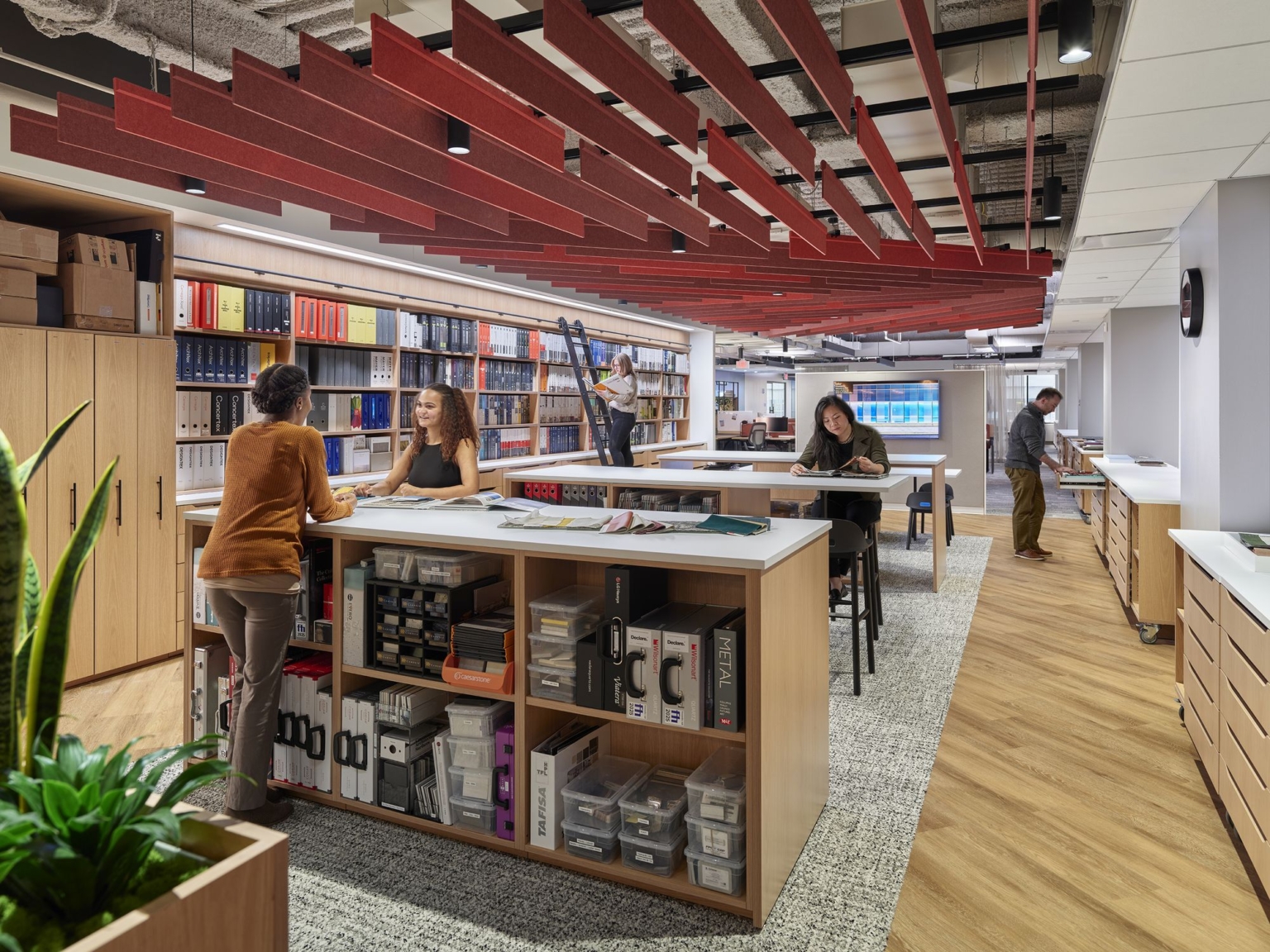
As artificial intelligence becomes embedded in the workplace, it is fundamentally redefining how people connect, collaborate, and create value. According to Architect Magazine’s coverage of Gensler’s 2026 Global Workplace Survey, AI “power users” (approximately 30% of employees) spend less time working alone (37% vs. 42%) and more time learning, socializing, and collaborating. Instead of reducing human interaction, AI is increasingly shifting employee time away from repetitive administrative work and toward collaboration, learning, and strategic problem-solving. As AI adoption increases, organizations are placing greater emphasis on workplaces that prioritize adaptability, collaboration, and human experience.
For the Architecture & Design community, this shift has significant implications for corporate workplace design, commercial interiors, and future-ready planning strategies. As organizations integrate AI at scale, the workplace must evolve beyond static layouts and predictable space allocation. Instead, it must support fluid, activity-based environments that flex between deep focus, collaboration, hybrid interaction, and rapid reconfiguration. This evolution challenges A&D professionals to design spaces that are not only efficient and branded, but fundamentally responsive to changing patterns of work.
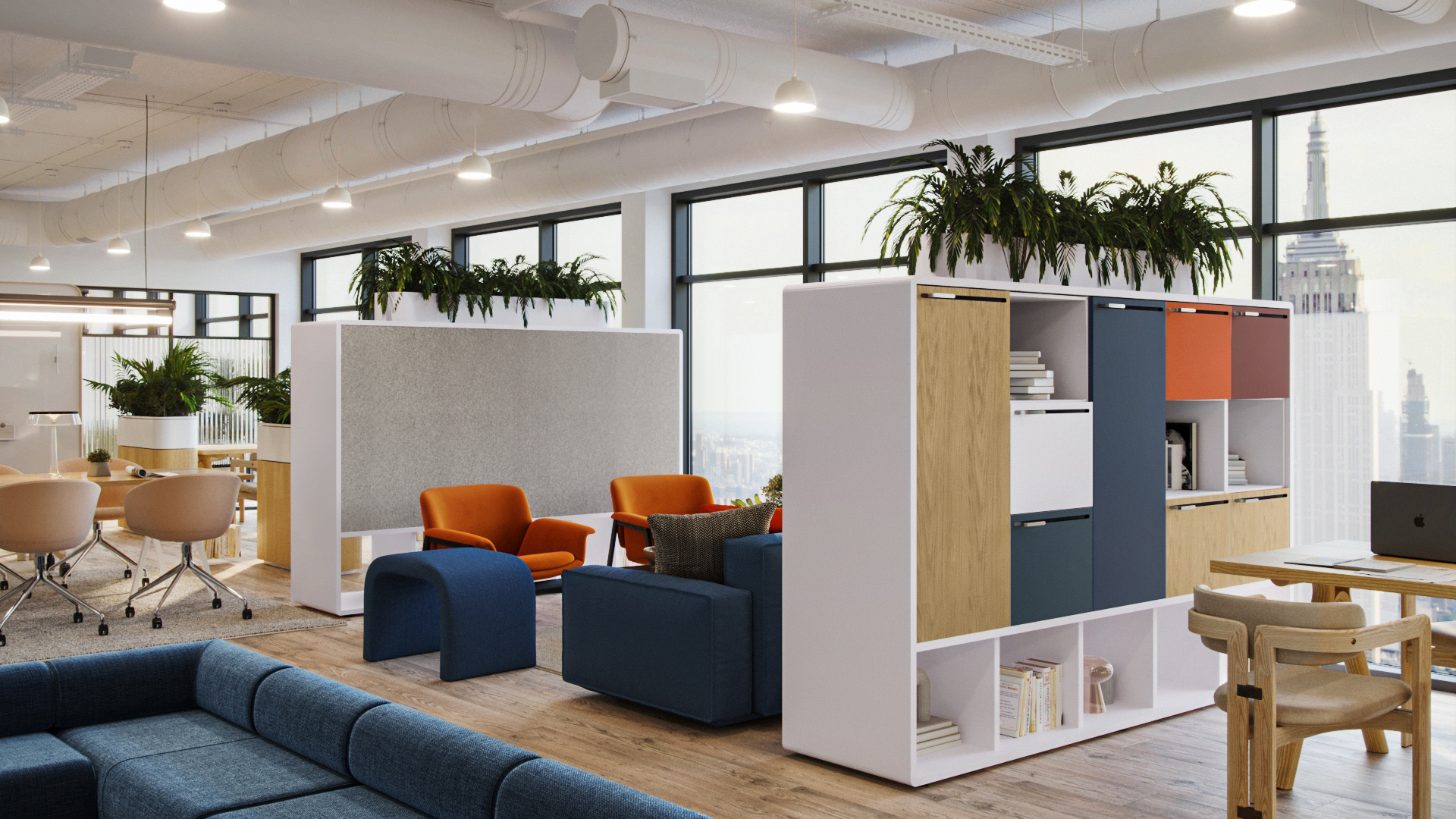
Within this context, storage strategy emerges as a critical but often underleveraged component of workplace design excellence. As AI accelerates adaptability in workflows, the built environment must support that same level of flexibility. High-density storage systems, modular lockers, and mobile shelving solutions allow design teams to reclaim square footage and reallocate it toward higher-value spaces such as collaboration zones, innovation hubs, and multi-use team areas.
Systems like high-density mobile aisle storage and reconfigurable casework provide architects and designers with tools to reduce spatial waste while increasing functional density - especially in corporate headquarters, healthcare campuses, and higher education environments where adaptability is essential.
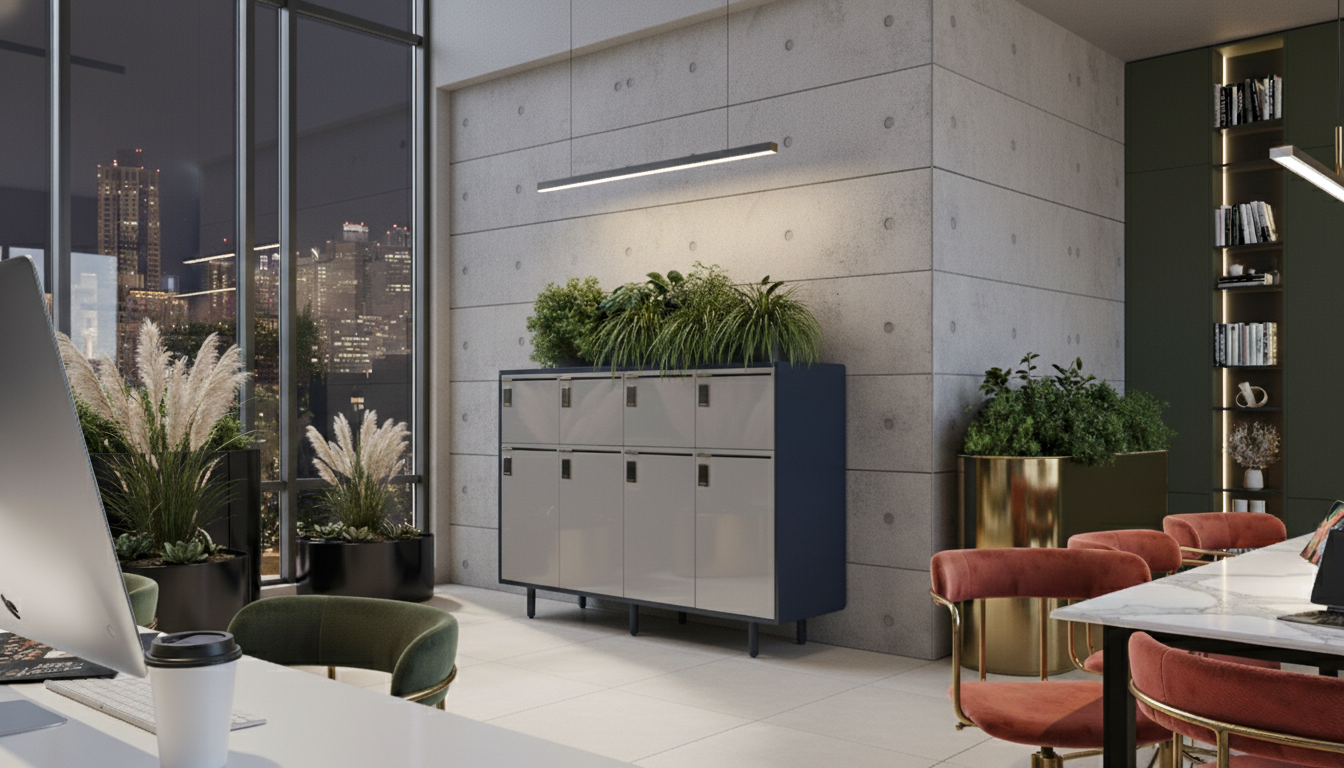
For A&D professionals, integrating intelligent storage is not simply about efficiency; it is about enabling spatial performance. When storage is strategically embedded into the design narrative, it reduces visual and operational friction, supports activity-based working, and enhances the overall user experience. Well-planned storage systems allow workplaces to seamlessly transition between focused work, collaborative engagement, and flexible team-based configurations, reinforcing the core principles of human-centered, future-ready design.
At Diversified Storage Solutions, we partner directly with architects, designers, and workplace strategists to support this evolution in corporate environments. Our high-density shelving, modular locker systems, and adaptable storage solutions are designed to maximize spatial efficiency while aligning with the design intent of modern workplaces.
As AI continues to reshape how organizations operate, DSS helps the A&D community translate that shift into the built environment - creating workplaces that are flexible, intentional, and built for the future of human-centered work.


